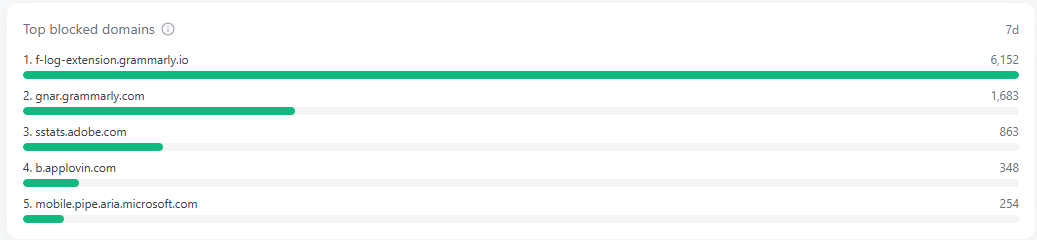
The Top Blocked Domains card appears directly below the Threats Detected vs Blocked chart and lists the top five domains most frequently blocked by Scout’s DNS filtering system during the past 7 days.
Overview
The Top Blocked Domains card ranks the domains that your network has attempted to access most often but were denied by DNS filtering. It provides a focused snapshot of repetitive or widespread connection attempts that were automatically stopped before reaching external hosts.
Each row in the list includes:
- The domain name
- The total block count over the past week
- A horizontal bar that visualizes relative frequency
This view helps you quickly identify which destinations are being filtered most often.
How It Works
Whenever a device attempts to resolve a domain that matches a blocked rule (whether due to a threat list, content category, or custom organization policy) Scout’s DNS service records the event. Those records are aggregated and ranked by frequency, producing a clear top-five list for the last seven days.
Only the top five entries are shown to keep the display concise and actionable.
Why It Matters
Understanding which domains are most frequently blocked can reveal patterns of risky or unnecessary traffic. Common reasons for high block counts include:
- Background telemetry from applications or devices contacting tracking domains
- Malware callbacks attempting to reach command infrastructure
- User browsing that regularly hits restricted categories
Recognizing these trends helps you decide whether to investigate potential compromise, adjust DNS policies, or allowlist legitimate services that are being overblocked.
Tips and Best Practices
- Review recurring entries to determine whether they represent threats, misconfigurations, or harmless noise.
- Spikes tied to a single domain can point to infected or misbehaving endpoints.
- Use this data to fine-tune your Blackhole organization-specific allowlists.
The Top Blocked Domains card summarizes the five most frequently blocked domains from your DNS logs. Reviewing these regularly can help improve both protection accuracy and user experience.